Wondering what counts as an estate property in Upper Brookville? In this part of Nassau County, the term means more than a large house with a long driveway. If you are buying, selling, or simply trying to understand the local market, it helps to know how land, zoning, and site conditions shape value here. Let’s dive in.
What "estate property" means here
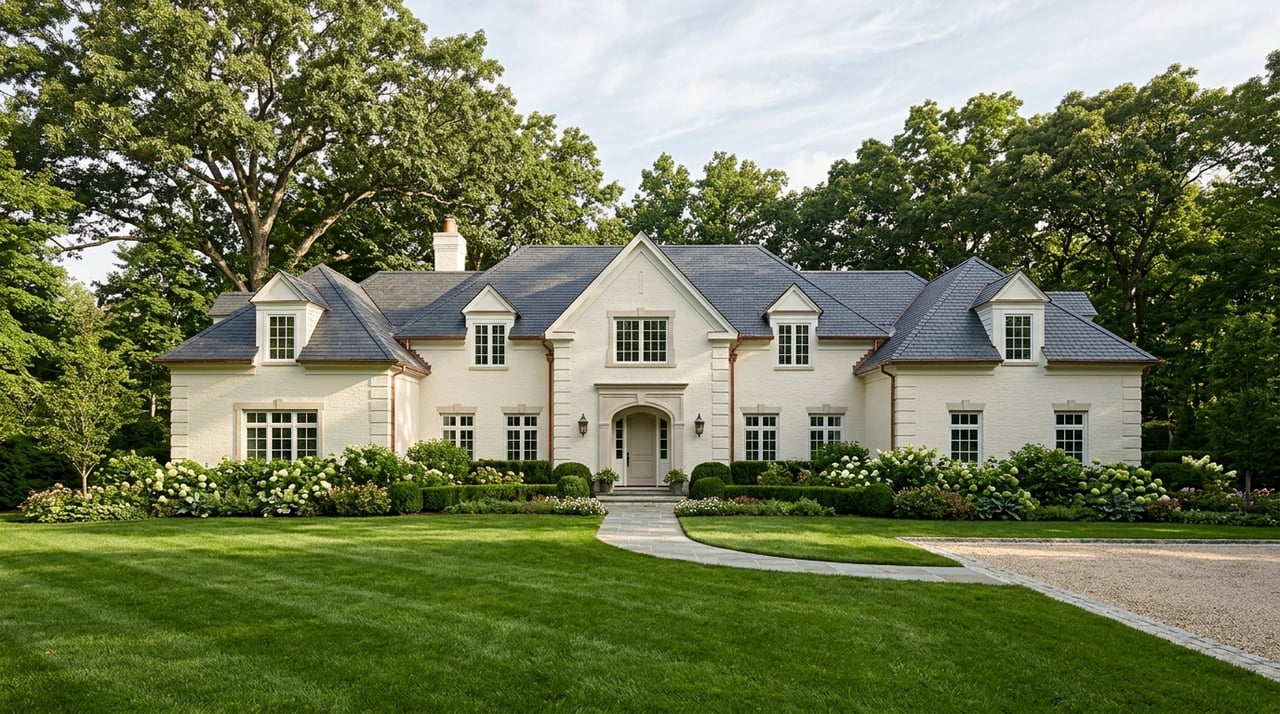
In Upper Brookville, an estate property usually refers to a detached single-family home on a large parcel with privacy, deep setbacks, and room for accessory uses. That understanding comes from the village’s land-use framework and zoning standards, which are built around low-density residential development.
The village was incorporated in 1932 to protect properties, guide land use, and preserve its residential character. Its planning documents still reflect that goal today, with a country-style setting and limited infrastructure and services consistent with large-lot living.
That local context matters. In Upper Brookville, estate living is tied to the land itself, not just the size of the residence. The setting, layout, and legal use of the property are all part of the picture.
Why Upper Brookville feels distinct
Upper Brookville has long been defined by open space, winding roads, rolling hills, and wooded areas. Village history describes a landscape of open fields, lanes, and homes of different sizes set into a natural environment.
That gives estate properties here a very different feel from homes in a conventional subdivision. You may find more privacy, deeper setbacks, and a stronger sense of separation from neighboring properties.
The broader Gold Coast setting also shapes the area’s identity. The village master plan notes that Planting Fields Arboretum covers about 416 acres, or roughly 15% of the village land area, reinforcing the connection between Upper Brookville and the region’s large historic estates.
Zoning shapes the estate market
If you are evaluating an estate property in Upper Brookville, zoning is one of the first things to review. The village includes a Suburban Estate OP1 five-acre district and a Residence R1 two-acre district.
In the OP1 district, the minimum lot area is 5 acres. In the R1 district, the minimum lot area is 2 acres. These districts also require deep setbacks and limit maximum building coverage to 10% in OP1 and 15% in R1.
Those rules help explain why homes here often sit comfortably within the landscape rather than filling the lot. They also affect whether a property can be expanded, altered, or used in the way a buyer imagines.
Lot size is not just a headline number
A large parcel is not automatically the same as a fully conforming or easily expandable lot. Upper Brookville’s code excludes streets, rights-of-way, and narrow slivers of land from minimum lot-area calculations.
That means the acreage shown in a listing may not tell the whole story. Older nonconforming lots are also treated differently from conforming ones, so it is important to verify the zoning district, lot area, frontage, and legal status early.
Site conditions matter as much as square footage
One of the biggest differences between estate properties and more typical suburban homes is how much the land affects day-to-day ownership. In Upper Brookville, site fit is a major part of value.
The village’s design standards emphasize preserving natural cover, minimizing grading, retaining topography, and protecting trees, ponds, and watercourses. In practice, that often means estate lots feel wooded, sloped, and highly specific to their setting.
A beautifully designed home can still raise practical questions if the driveway pitch is steep, drainage is poor, or retaining walls need attention. On large parcels, exterior conditions deserve the same level of focus as kitchens, baths, and finishes.
What to notice during a showing
When you tour an estate property in Upper Brookville, it helps to look beyond the interiors. A thoughtful showing should include close attention to the land and infrastructure.
Key things to review include:
- Zoning district and minimum lot requirements
- Frontage, buildability, and any nonconforming status
- Drainage patterns and signs of water pooling
- Driveway slope and ease of access
- Mature trees and their condition
- Retaining walls, grading, and erosion concerns
- Accessory buildings and whether they appear consistent with local rules
Because the village’s stormwater standards focus on runoff from impervious surfaces, drainage is not a minor issue. It is part of how the property functions over time.
Accessory structures need careful review
Estate buyers are often drawn to features beyond the main house, such as detached garages, pool houses, barns, generators, or other outbuildings. In Upper Brookville, those features are regulated and should be reviewed carefully.
In the OP1 district, a detached accessory building generally may not exceed 1,200 square feet, and all accessory buildings combined may not exceed 2,000 square feet. The R1 district has lower limits.
That means you should not assume existing or future accessory structures are simple add-ons. Their size, placement, and combined footprint can affect both legal compliance and future plans for the property.
Road access is part of the ownership experience
Upper Brookville’s estate setting comes with a practical consideration many buyers do not think about right away: road maintenance. The village reports 20.59 total road miles, and 36 private roads are maintained by the residents on those roads.
If a home is on a private road, it is wise to ask who handles plowing, paving, and long-term repair. This can affect your budget, convenience, and expectations for year-round upkeep.
For buyers relocating from more conventional neighborhoods, this is one of the clearest examples of how estate ownership can differ from standard suburban living. The appeal of privacy often comes with more responsibility.
Larger properties bring ongoing stewardship
Estate living in Upper Brookville can be rewarding, but it is also more maintenance-heavy than a typical suburban home. Large grounds, drainage systems, mature trees, accessory structures, and long driveways all require regular attention.
The village also regulates landscaping activity. Landscapers working in Upper Brookville must be licensed by the Town of Oyster Bay and file a copy with the Village Clerk, which is a useful reminder that local compliance is part of ownership.
A smart ownership plan usually includes:
- Early zoning and buildability review
- Inspection of drainage and stormwater flow
- Evaluation of tree health and site grading
- Review of accessory structures and their footprint
- Budgeting for private road or driveway upkeep
- Planning for licensed landscaping and exterior maintenance
In this market, stewardship is not separate from value. It is part of what protects the property over time.
Equestrian or hobby use may be possible
Some buyers are interested in estate properties that support horses or a hobby-farm component. Upper Brookville’s code does allow horses and livestock on qualifying lots, subject to acreage, setback, and occupancy limits.
That creates opportunity, but only when the lot and the code align. If you are considering this type of use, it is important to confirm the property qualifies rather than relying on appearance alone.
This is another reason estate property research should go beyond listing photography and square footage. The legal framework matters just as much as the setting.
Long-term value in Upper Brookville
Upper Brookville’s value story is closely tied to preservation. The village’s master plan describes the community as a rural, low-density place with a limited infrastructure footprint, and it highlights a court decision that upheld five-acre minimum lot zoning as a legitimate tool for preserving open space.
That long-standing approach helps explain why estate properties here often hold appeal for buyers who value privacy, land, and a more natural setting. The village’s planning framework is designed to protect that character.
At the same time, the master plan notes that some larger houses can feel oversized for their surroundings. For buyers, that is a helpful reminder to consider whether the home’s scale, landscaping, and accessory features feel proportionate to the site.
How to evaluate an estate property wisely
If you are serious about buying in Upper Brookville, the goal is not just to find a beautiful home. It is to find a property where the house, land, zoning, and long-term upkeep all make sense together.
A thoughtful evaluation should include both lifestyle and practical questions. How private is the setting? How usable is the land? Are the accessory structures an asset or a complication? Is the home well suited to the parcel, or will it require significant exterior work to maintain?
That balanced view is especially important in a market where design, land use, and presentation all shape value. In estate settings, details that seem secondary at first can become central after closing.
Whether you are preparing to buy or simply trying to understand the Upper Brookville market more clearly, informed guidance can make all the difference. If you are considering an estate property on the North Shore, Karen Sharf can help you look beyond the obvious and evaluate the full picture with care and experience.
FAQs
What is an estate property in Upper Brookville?
- An estate property in Upper Brookville usually means a detached single-family home on a large parcel with privacy, deep setbacks, and room for accessory uses, based on the village’s zoning and planning framework.
How large are lots for estate properties in Upper Brookville?
- Upper Brookville includes a five-acre OP1 district and a two-acre R1 district, so lot size often depends on the property’s zoning district.
Is every large parcel in Upper Brookville buildable or expandable?
- No. Lot-area calculations can exclude streets, rights-of-way, and narrow parts of land, and older nonconforming lots may be treated differently under the code.
What should buyers check during an Upper Brookville estate showing?
- Buyers should review zoning, frontage, drainage, driveway access, mature trees, retaining walls, erosion, and the legal status of accessory structures.
Are accessory buildings limited on Upper Brookville estate properties?
- Yes. In the OP1 district, a detached accessory building generally may not exceed 1,200 square feet, and all accessory buildings combined generally may not exceed 2,000 square feet. The R1 district has lower caps.
Do some Upper Brookville estate properties involve private road maintenance?
- Yes. The village reports that 36 private roads are maintained by the residents on those roads, so buyers should ask who handles plowing, paving, and repairs.
Can an Upper Brookville estate property allow horses or livestock?
- Sometimes. The code allows horses and livestock on qualifying lots, subject to acreage, setback, and occupancy limits.
Why does stewardship matter for estate properties in Upper Brookville?
- Stewardship matters because large-lot ownership often involves drainage, stormwater, mature trees, accessory structures, landscaping compliance, and ongoing exterior maintenance that directly affect long-term value.