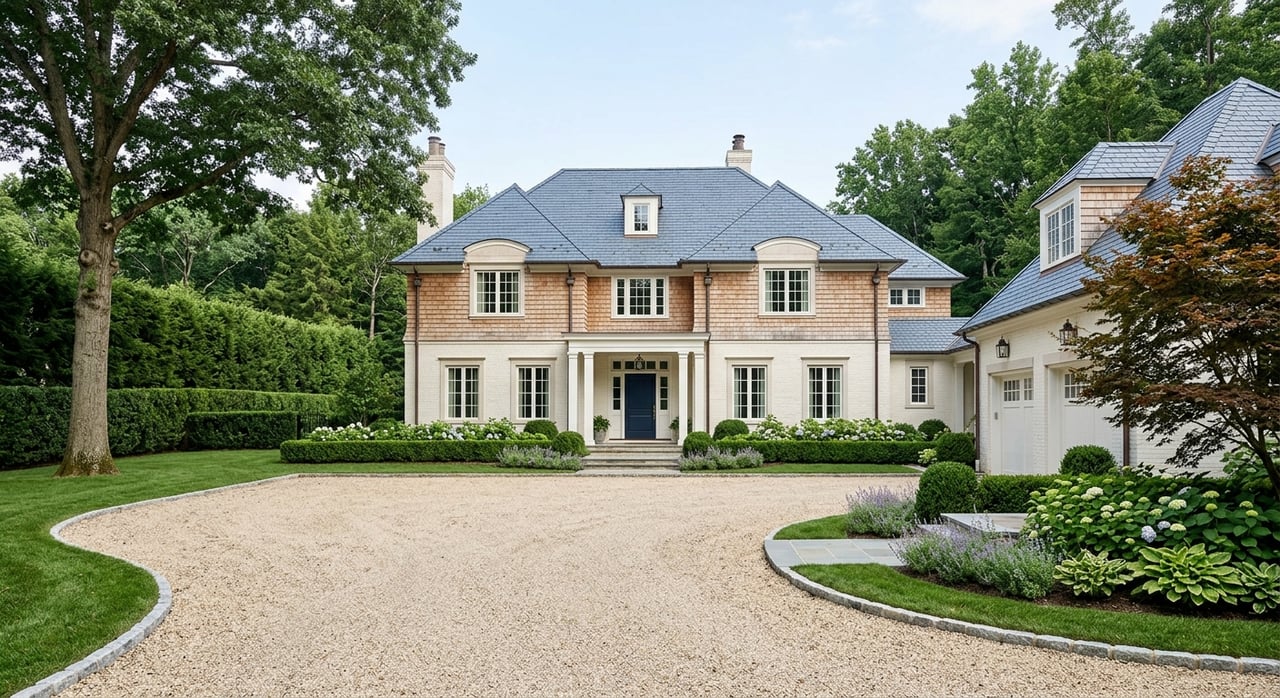
If you are selling land, a teardown, or a new build in Old Westbury, the usual real estate playbook is not enough. In this market, buyers are not simply buying square footage. They are buying privacy, scale, setting, and the confidence that a property fits the village’s estate character. This is where smart positioning matters most, and understanding the land can be just as important as understanding the house. Let’s dive in.
Why Old Westbury Needs Precise Positioning
Old Westbury sits firmly in the luxury segment, and the numbers support that. Redfin reported a median sale price of $3,189,091 over the three months ending May 2026, while Zillow reported a typical home value of $2,970,000 as of May 31, 2026. With limited inventory and only a small number of new listings, buyers are paying close attention when the right property comes to market.
That does not mean every luxury listing will sell on aspiration alone. Redfin also showed a 100.3% sale-to-list ratio, but 45.7% of homes had price drops. In simple terms, buyers are active, but they are selective, and pricing has to line up with what the property truly offers.
Land Is the Product
In many towns, land is a backdrop. In Old Westbury, land is often the main story. The village’s land-use framework is built around large-lot single-family homes, estate settings, institutional uses, and open space, which continues to shape what buyers expect today.
That expectation is tied to the village’s history as well. The late-1890s estate era, the post-World War II subdivision period, and the 1987 zoning shift to four-acre minimum lots all help explain why estate scale, visual openness, and privacy remain central to value. When you market a parcel here, you are not selling generic acreage. You are selling the possibility of a well-composed estate property.
What Zoning Signals to Buyers
Old Westbury’s current B-4 zoning rules tell an important story for landowners, builders, and buyers. In general, one family is allowed per 174,240 square feet, or four acres. Combined principal-dwelling and accessory-building area is capped at 6% of lot area, and combined structures and paved surfaces are capped at 25%.
The code also requires that a meaningful share of the first three acres remain in a natural, undeveloped state. Front yard minimums are substantial as well, with 150 feet required in most cases and 200 feet on several major streets. Add screening requirements for parking and driveways, and it becomes clear that the buildable envelope is not a technical footnote. It is a major part of the property’s appeal and limitation.
Why the Site Envelope Matters
For buyers considering land or a teardown, one of the first questions is not what sits there now. It is what can realistically be created there. A parcel may sound impressive on paper, but if setbacks, coverage rules, access, or natural-state requirements limit the outcome, the value equation changes.
That is why the strongest positioning focuses on the practical estate potential of the site. Buyers want to understand the envelope for the home, the approach for the driveway, the opportunities for screening and privacy, and whether the lot can support amenities like a pool or tennis court without creating design strain.
How to Position Land in Old Westbury
Land should be marketed as a buildable estate site, not simply as vacant property. The more clearly you explain the development story, the easier it is for a buyer to see the opportunity and assign value to it.
A strong marketing package for land in Old Westbury should usually address:
- Lot dimensions
- Zoning district
- Buildable envelope
- Subdivision or lot-averaging status
- Sewer or utility access where relevant
- Natural features that add privacy or create constraints
- Parcel-specific school district assignment
This level of detail matters because Old Westbury buyers are often evaluating not just acreage, but fit. They want to know whether the parcel supports the kind of estate home the setting suggests.
Infrastructure Can Strengthen the Story
The village land-use study notes that sewer infrastructure is present along Jericho Turnpike, Old Westbury Road, and the western portion of the Long Island Expressway North Service Road. For some parcels, that can make the development story more compelling.
Infrastructure does not replace zoning analysis, but it can improve feasibility and buyer confidence. When a parcel combines acreage, access, and infrastructure, it is often easier to position it as a serious build opportunity rather than a speculative one.
How to Position Teardowns
A teardown should not be marketed only as an older home that needs replacing. In Old Westbury, that approach is usually too shallow. The better strategy is to present it as a replacement opportunity when the site, location, and zoning can support a stronger final product.
That means pricing should reflect land value, zoning feasibility, and the strength of the future estate concept. If the lot can support a substantially more compelling home than the one currently standing, that potential should shape the marketing narrative. If it cannot, the pricing needs to reflect that reality early.
When a Teardown Has Real Appeal
The most appealing teardown opportunities usually offer a combination of:
- A credible buildable envelope
- Desirable siting and setback potential
- Privacy or mature landscaping
- A strong driveway approach
- Room for amenities within code limits
- A parcel that supports estate-scale design
In this segment, buyers are rarely paying for demolition alone. They are paying for what the finished result could become within the village’s rules and visual context.
How to Position New Builds
New construction in Old Westbury needs to feel tailored, not generic. The village regulates architectural repetition, and substantially similar exterior treatments cannot be repeated within 900 feet on the same street or corner context. That rule reinforces something many luxury buyers already want: a home that feels custom and specific to its site.
The design cues that tend to read best here are custom proportions, restrained materials, deep setbacks, concealed service areas, and landscape design that softens the home’s bulk. Given the limits on coverage, siting, and façade repetition, the best new builds do not look oversized for the lot. They feel composed, intentional, and estate-like.
Pricing New Construction With Market Fit
Current market data suggests a center of gravity around the $3 million range. Redfin and Zillow both point to that level, and a Q1 2026 market update from Daniel Gale Sotheby’s International Realty showed a median sales price of $3.24 million, with two-thirds of closed sales between $3 million and $5 million.
That does not mean every new build belongs in that band, but it does suggest where buyer absorption has been concentrated. A new home needs to justify its price through architecture, grounds, privacy, and overall fit with the street and the village. In a selective luxury market, the product has to make sense before the price can hold.
School Districts Are Parcel Specific
One detail that deserves careful handling is school district assignment. The village map shows multiple school districts crossing Old Westbury, including East Williston, Jericho, Locust Valley, North Shore, Roslyn, Mineola, and Westbury.
For buyers, that means school assignment is parcel specific rather than village wide. It can affect search behavior and perceived value, so it should be verified and presented clearly when marketing land, teardowns, or new construction.
Planning Board Review Can Affect Value
For land and development-minded buyers, village review matters. The Planning Board reviews site plans for new homes, certain additions and alterations, and subdivisions. A Planning Board subcommittee also reviews façade changes of more than 20% and requires materials compatible with the village’s established character.
For subdivisions, lot averaging may be allowed only with village approval, and the resulting lots generally cannot fall below three acres. These are not minor details. They can shape timing, feasibility, design choices, and ultimately the property’s market position.
What Buyers Usually Want Answered
In Old Westbury, serious buyers tend to focus on a few practical questions early. The clearer your answers, the stronger your positioning.
Common buyer questions include:
- Which school district is this parcel in?
- What is the actual zoning envelope?
- Will the project need Planning Board review?
- Can the site support a pool, tennis court, or other amenities?
- Is the property better suited for renovation or a clean-slate build?
- Does the lot’s layout support privacy, screening, and estate-style siting?
These questions go straight to usability and long-term value. In a market like Old Westbury, they often matter more than broad marketing language.
Why Presentation Still Matters
Facts drive confidence, but presentation drives emotional connection. Old Westbury carries a strong visual identity shaped by estate history, formal landscapes, and properties that feel thoughtfully composed. Buyers often respond to a property that reads as intentional, private, and aligned with that character.
That is why positioning should connect the technical story with the lifestyle story. A parcel is not just four acres. A new build is not just a fresh house. The strongest marketing helps buyers picture how zoning, design, landscape, and setting come together as a complete estate experience.
If you are preparing to sell land, a teardown, or a new build in Old Westbury, thoughtful strategy can make a meaningful difference. For tailored guidance on pricing, presentation, and positioning, connect with Karen Sharf.
FAQs
What makes land in Old Westbury different from land in other luxury markets?
- Old Westbury’s zoning, estate history, large-lot framework, and buyer expectations make the site itself a major part of the value story.
What should a land listing in Old Westbury include?
- A strong land listing should clearly explain lot size, zoning district, buildable envelope, utility or sewer access where relevant, subdivision status, natural features, and parcel-specific school district assignment.
How should a teardown in Old Westbury be priced?
- A teardown should usually be priced based on land value, zoning feasibility, and the strength of the replacement opportunity rather than the current home alone.
What do buyers want in a new build in Old Westbury?
- Buyers often look for a home that feels custom, estate-like, well-sited, and consistent with the village’s character, with architecture and landscaping that justify the price.
Why does school district assignment matter in Old Westbury?
- Old Westbury includes multiple school districts, so assignment depends on the specific parcel and can influence buyer interest and perceived value.
Does new construction in Old Westbury require village review?
- New homes, certain additions and alterations, and subdivisions are subject to Planning Board review, and some façade changes are reviewed for compatibility with village character.